


Students
Proactively build their own learning journey.
- Reinforce foundational knowledge.
- Learn at their own pace.
- Explore new fields.
- Blend online learning with their degree program.
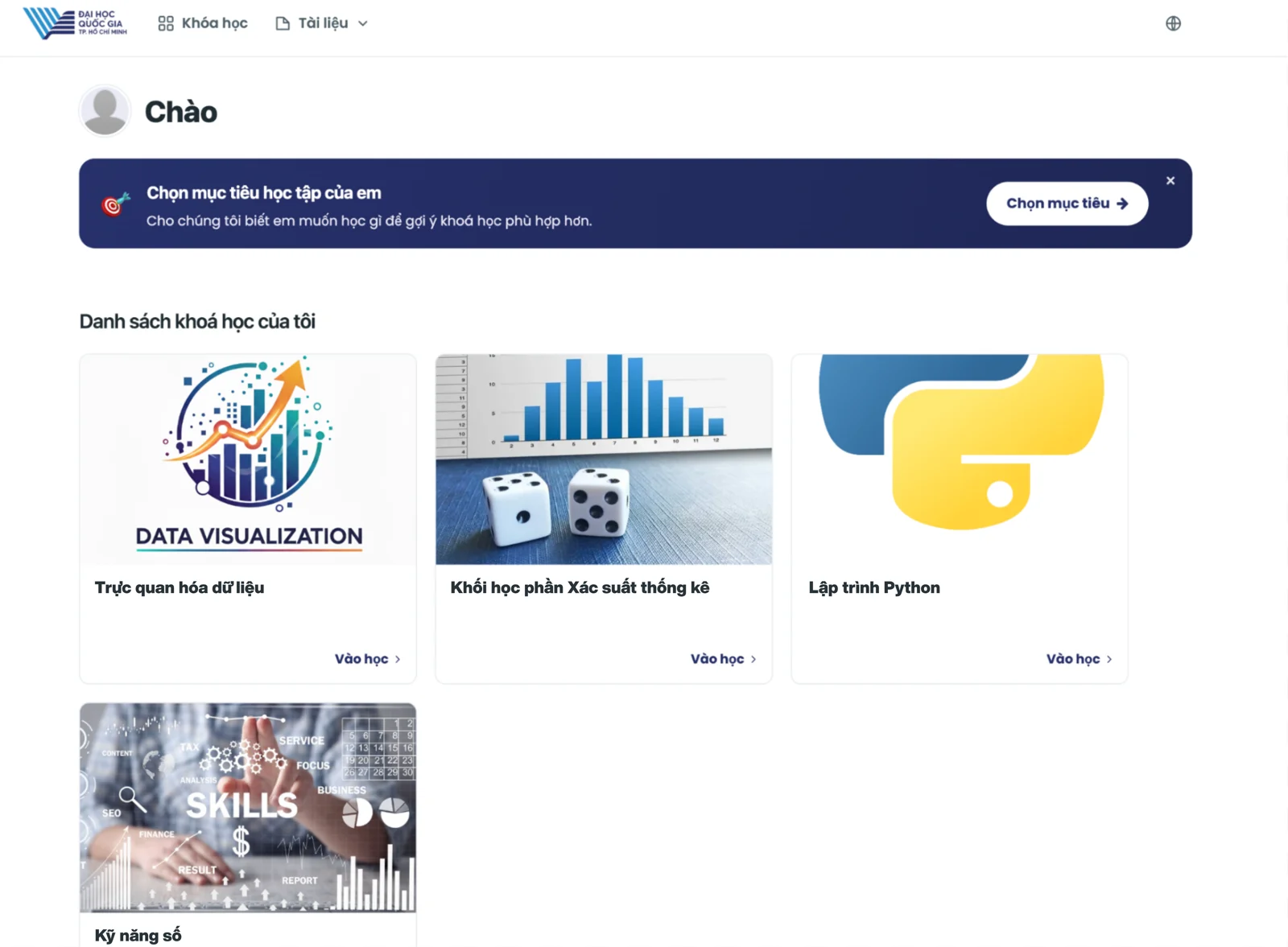
VNU-MOOC, the VNU-HCM online learning system, broadens learning opportunities in the digital space — helping students reinforce knowledge, explore new fields and proactively build their own learning path throughout university.

Build the basics, ready for year one.
VNU-MOOC is the online learning system of Vietnam National University, Ho Chi Minh City — broadening access to learning in the digital space and supporting students throughout their university journey.
A shared learning space where the academic community's knowledge meets each student's needs and pace.
VNU-MOOC is not just a place to “put courses online”, but a digital learning platform that accompanies students from the first year throughout their university journey.
Content scale per the 2026–2027 rollout plan
MOOC courses built
MOOC courses offered in 2026–2027
Lessons with interactive activities
System and first 5 MOOC courses begin development
→The system officially goes live
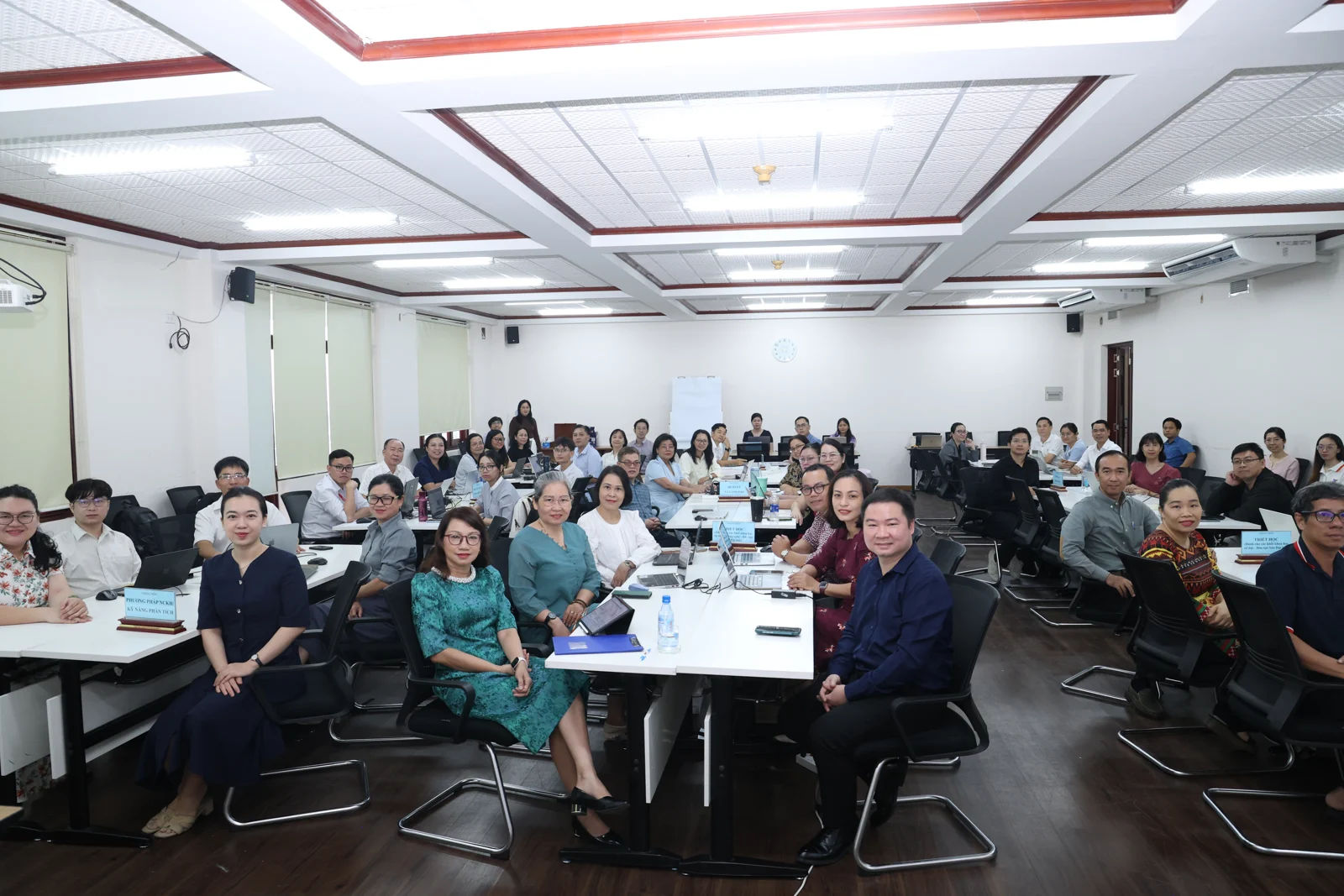
Each course is built with experts and lecturers from VNU-HCM member universities and affiliated units.
Lecturers and experts build the content and design the lessons.
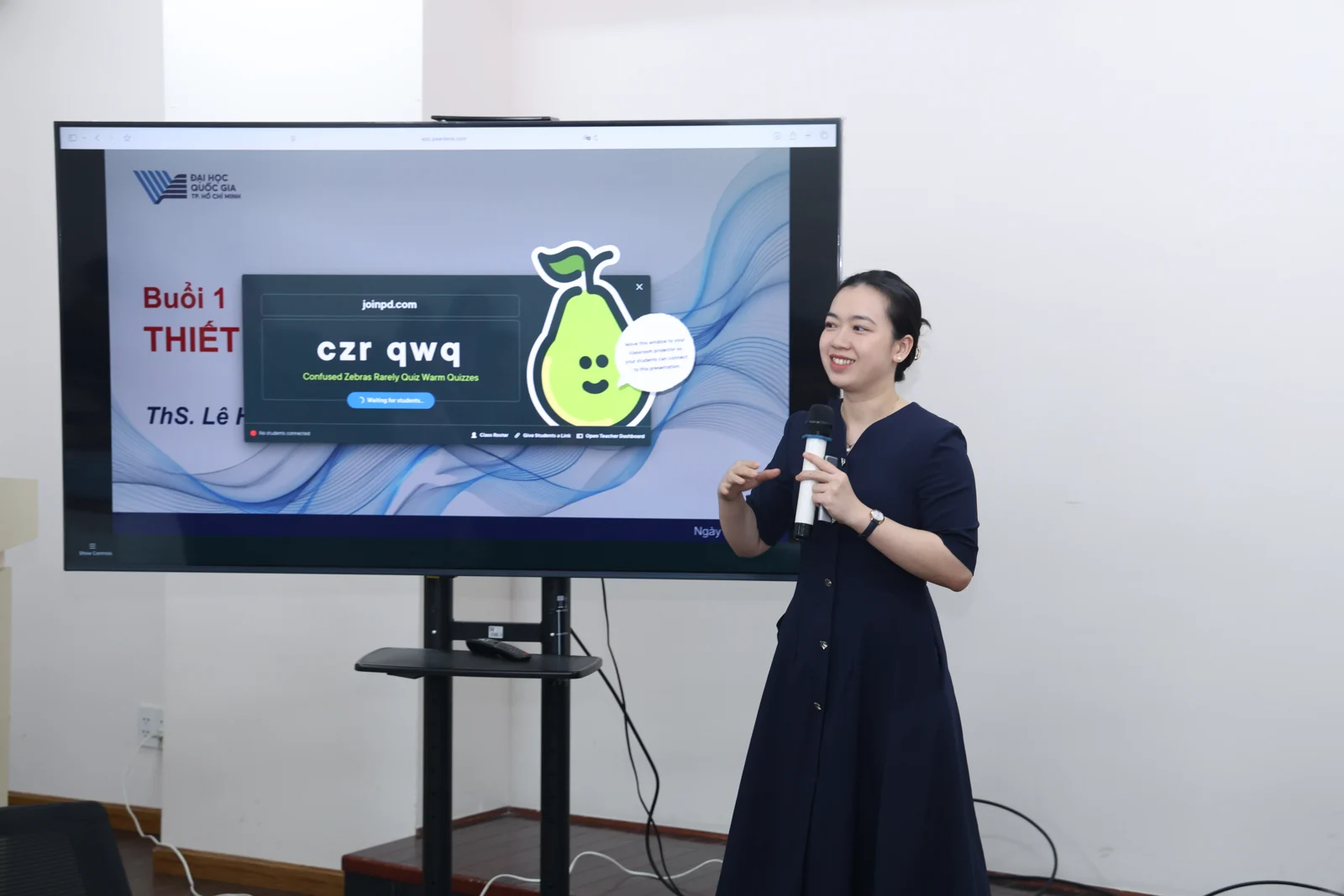
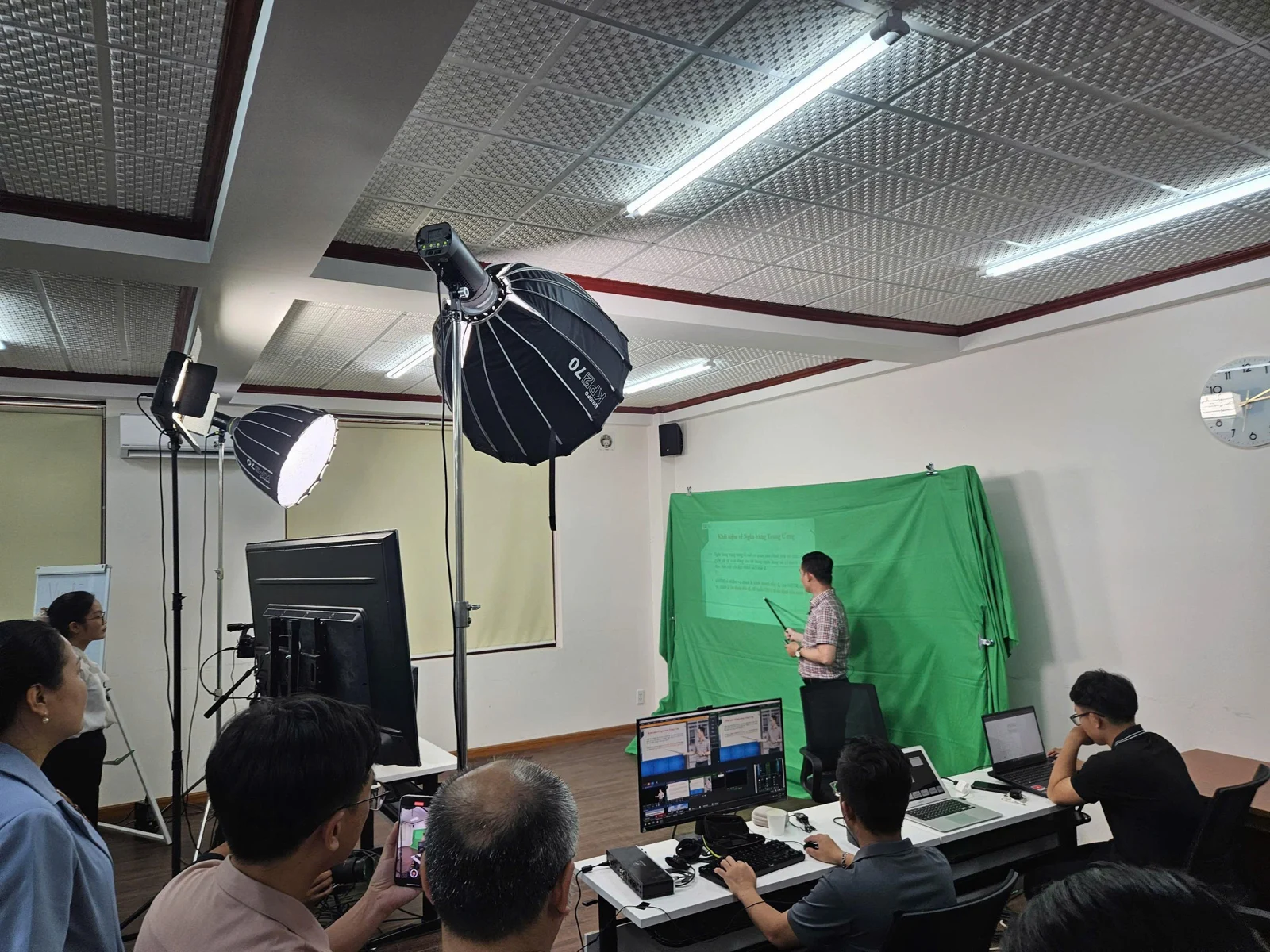
The team is trained in designing for the digital space, developing and recording lessons.
Content, lessons and assessments are carefully reviewed.
Connect with each university via its official website.
 University of TechnologyOfficial website (opens in new tab)
 University of ScienceOfficial website (opens in new tab)
 University of Social Sciences and HumanitiesOfficial website (opens in new tab)
 University of Information TechnologyOfficial website (opens in new tab)
 International UniversityOfficial website (opens in new tab)
 University of Economics and LawOfficial website (opens in new tab)
 University of Health SciencesOfficial website (opens in new tab)
 An Giang UniversityOfficial website (opens in new tab)
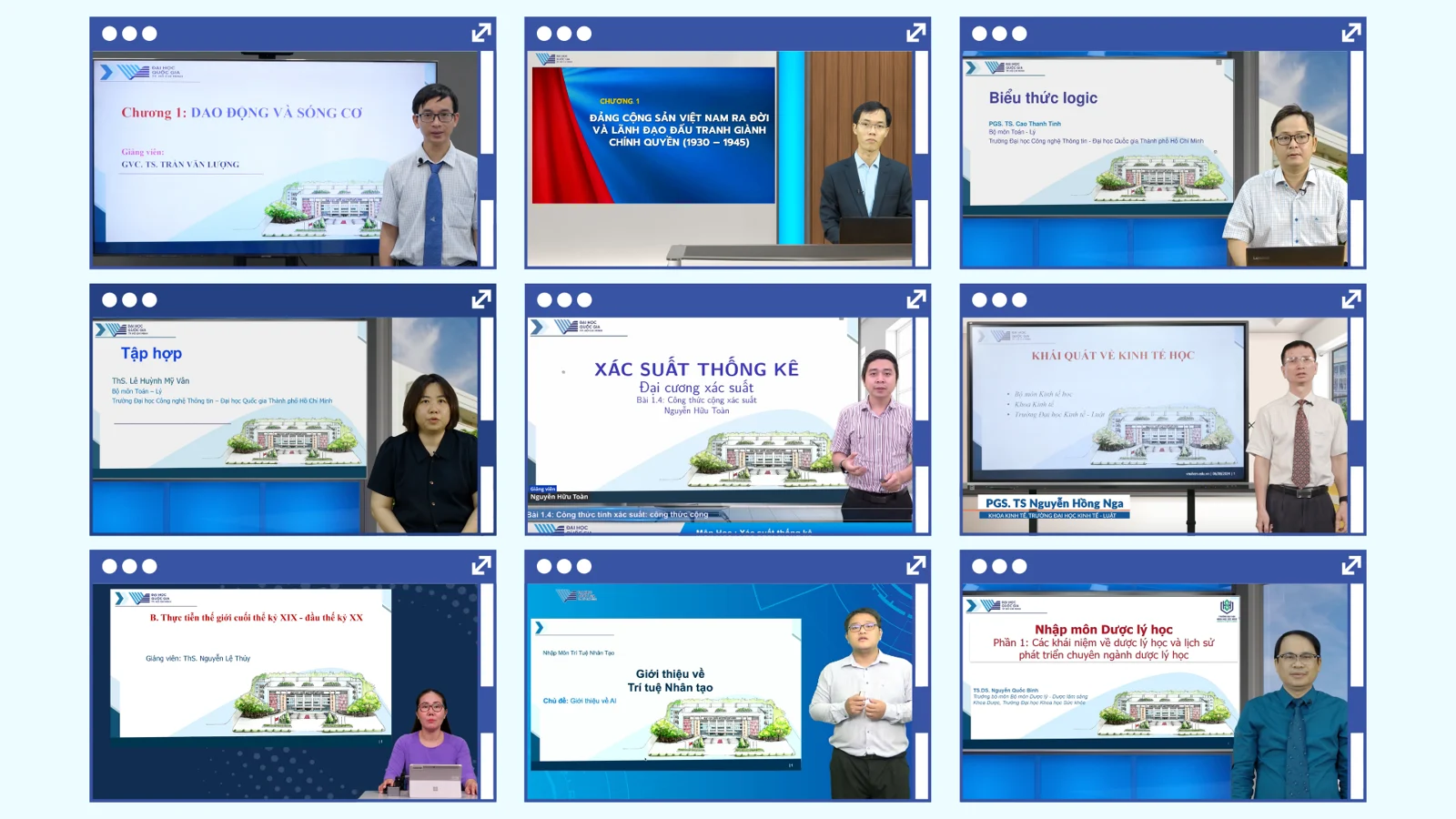
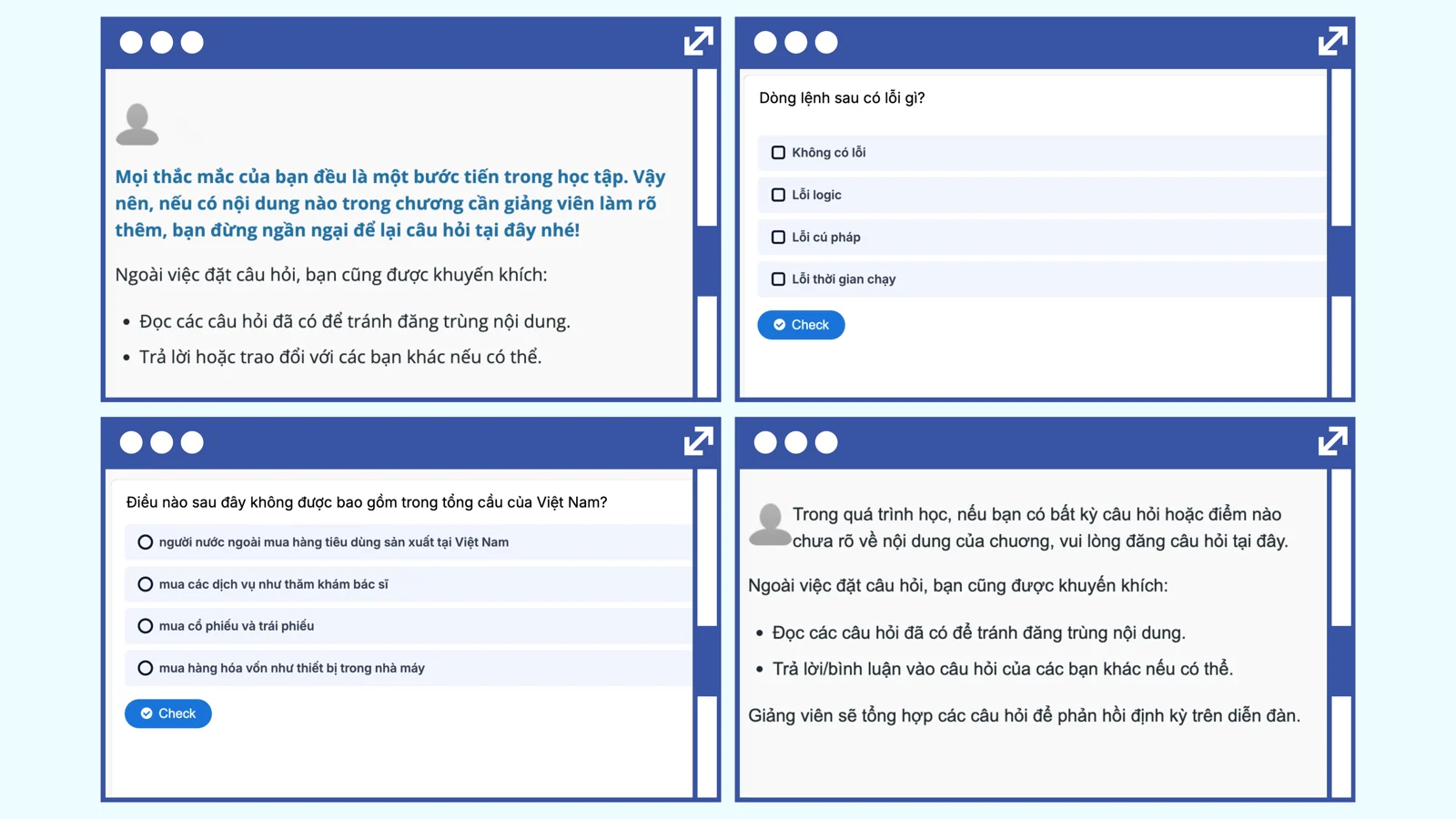
Each course combines lecture videos, interactive activities, discussion and support — so learners study and practise at once.
Focused on the essentials; most under 15 minutes.
Learn, practise and reinforce knowledge yourself.
Exchange, ask questions and learn from one another.
Learners can request support whenever they hit an issue.
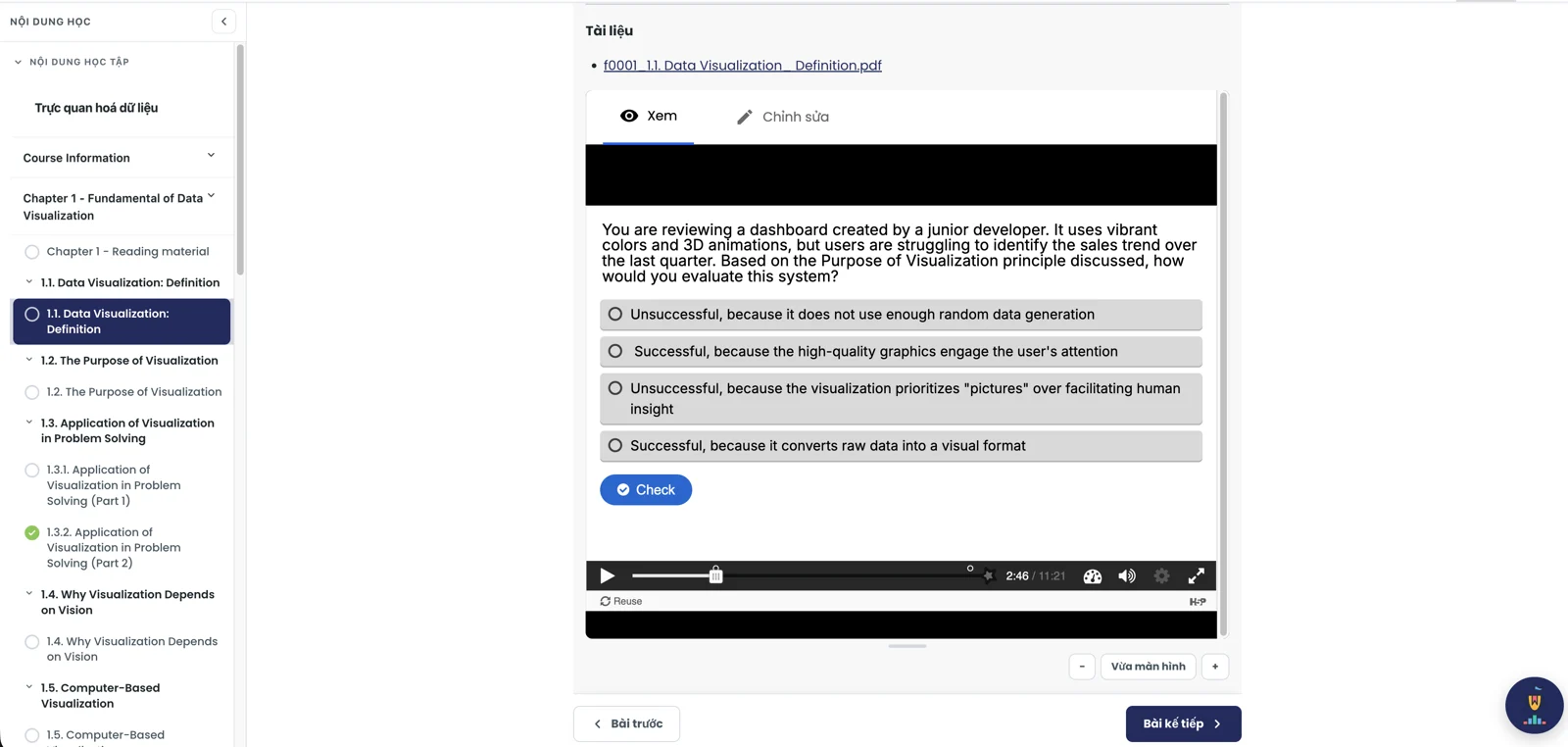
VNU-MOOC is present at every stage — from the first days of university to linking learning outcomes with the training path.
Three MOOC courses — Physics, Chemistry, Biology — help new students prepare for year one.
Explore courses across many fields: political theory, IT, basic sciences, social sciences, health…
Blend MOOCs into your formal studies.
Learning outcomes may be considered for credit recognition or transfer per regulations.
Serving three groups within VNU-HCM, with four core values throughout: proactivity, flexibility, connection and articulation.
Proactively build their own learning journey.
Share expertise through digital learning.
Share resources and broaden teaching modes.
Learners set their own needs and pace.
Study at various times, fitting your own schedule.
Connect learners with lecturers, peers and digital materials.
Open more ways to tie online outcomes to the training program.
Toward a digital learning ecosystem: broadening access to knowledge, enriching the learning experience and connecting more closely with university training.
Pick the right courses, learn at your own pace, and let every lesson move your university path forward.